Don’t miss anything! Sign up for my newsletter & join our Facebook community of 1,000+ like minded thinkers!
- Home
- Evidence for God
3 Logical Reasons Why God May Just Exist
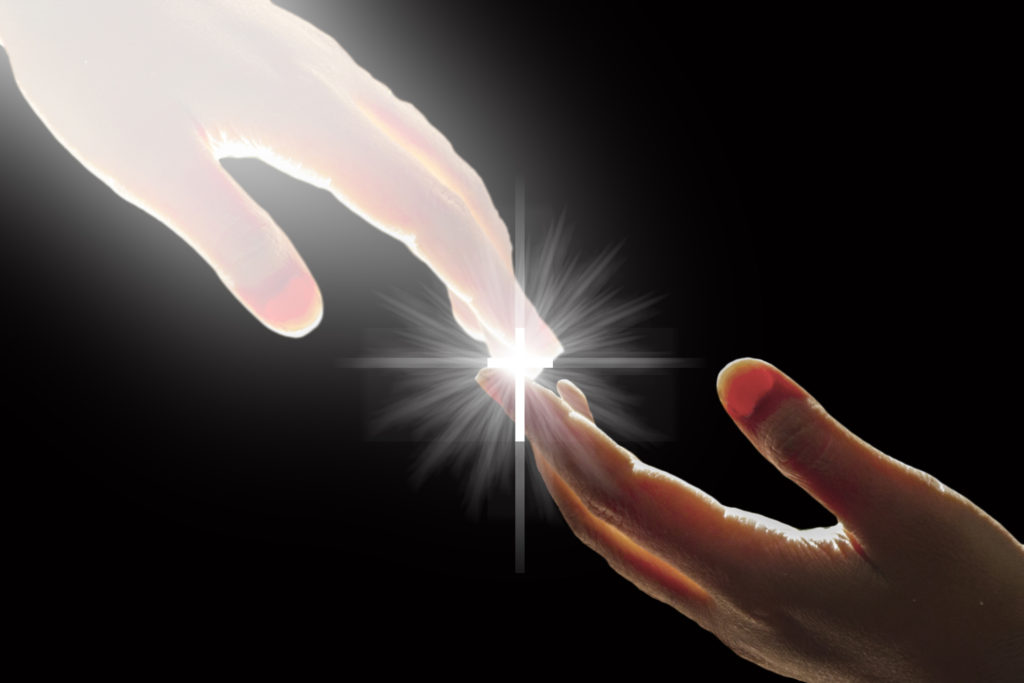
Does God exist? It is the question that has defined human history, philosophy, and personal searching for millennia. In an age of empirical science, the skeptic often asks: "How can you believe in a being you cannot see or touch?" Many conclude that there is simply no real evidence to be found.
But is that true? Or have we simply stopped looking at the evidence right in front of us?
The Apostle Paul famously wrote in Romans 1:20: “For since the creation of the world God’s invisible qualities–his eternal power and divine nature–have been clearly seen, being understood from what has been made, so that people are without excuse…” If we are "without excuse," it implies that the evidence is not hidden in a secret corner, but woven into the very fabric of our reality.
Here, I lay out three logical arguments from the worlds of apologetics and theology for the thesis that God exists.
Prefer Listening?
This is my talk from the Explore God series at Calvary Church of Orland Park and Noor Calvary Church.
Key Ideas in Brief
- The Cosmological Argument: Scientific evidence indicates the universe had a beginning, which logically requires an uncaused, timeless, and powerful cause.
- The Teleological Argument: The "appearance of design" and specified complexity in nature strongly suggest an underlying intelligence or engineer.
- The Axiological Argument: The existence of a universal moral law within the human heart points toward an objective moral lawmaker.
- Rational Discovery: Faith is not a blind leap, but a conclusion reached by observing "what has been made."
1. Creation: The Cosmological Argument
The first reason to believe centers on the origin of the universe itself. "Since the creation of the world," the evidence from cosmology has provided a strong case that something immensely powerful, intelligent, and immaterial brought the universe into being.
As William Lane Craig argues in The Blackwell Companion to Natural Theology:
”If the universe has a cause, then an uncaused, personal Creator of the universe exists, who sans the universe is beginningless, changeless, immaterial, timeless, spaceless, and enormously powerful.”
Even our popular culture reflects this intuition that effects require causes. In The Sound of Music, Maria and the Captain sing a profound truth: "Nothing comes from nothing; nothing ever could." If we have a universe of "something," logic dictates it could not have come from "nothing."
Cosmologist Alexander Vilenkin reinforced this in his 2006 book Many Worlds in One:
“It is said that an argument is what convinces reasonable men and a proof is what it takes to convince even an unreasonable man. With the proof now in place, cosmologists can no longer hide behind the possibility of a past-eternal universe. There is no escape, they have to face the problem of a cosmic beginning.”
2. Design: The Teleological Argument
The second reason is found in "the things that are made"—the specified complexity of organic, cosmological, and human chemistry. When you look at a painting, you assume a painter. When you see an engine, you assume an engineer. When you see a book, you assume an author.
Logic suggests that when we see intricate design in nature, it is most reasonable to assume a designer. Remarkably, even Richard Dawkins, perhaps the world’s most famous atheist, admits that biology looks like it was crafted for a reason.
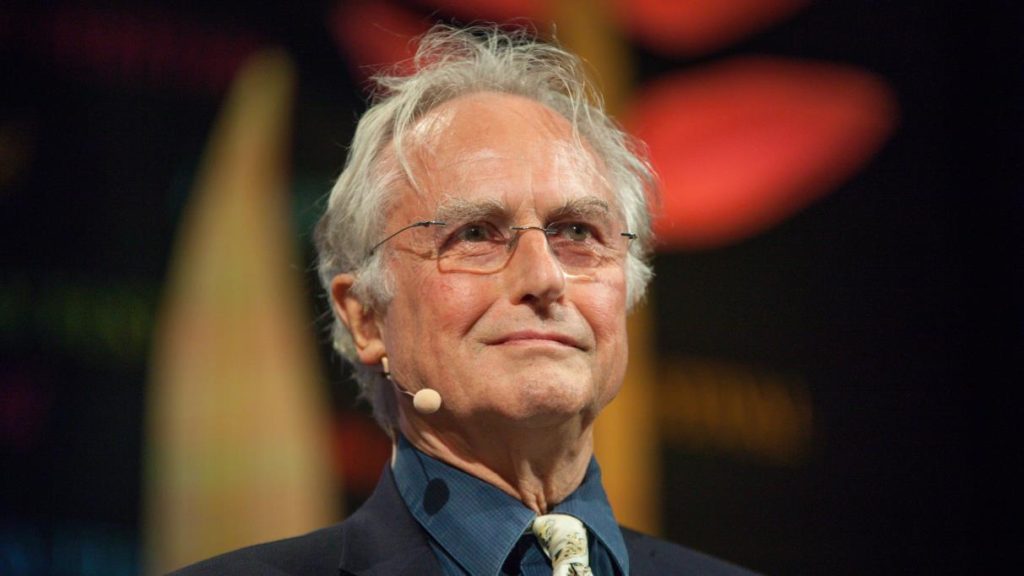
In The Blind Watchmaker, he writes:
“Biology is the study of complicated things that give the appearance of having been designed for a purpose.”
While skeptics argue this is merely an "appearance," the complexity found at the cellular level suggests an intentionality that random, unguided processes struggle to explain.
3. Morality: The Axiological Argument
The final reason is the moral law that we all embrace. We are "without excuse" because we live as though objective right and wrong exist. This universal sense of "ought" is evidence of a moral lawmaker.
While some argue we can be "good without God," the question isn't whether an atheist can behave morally (they certainly can), but rather where those objective moral standards come from in a purely material world.
The philosopher Immanuel Kant famously reflected on this in his Critique of Practical Reason:
“Two things fill the mind with ever new and increasing admiration and awe, the more often and steadily we reflect upon them: the starry heavens above me and the moral law within me.”
Facing the Evidence
Whether we look at the stars (cosmology) or the soul (morality), the evidence for a Creator is not easily dismissed. It provides a framework that explains why the universe began, why it is so complexly ordered, and why we feel a pull toward justice and goodness.
This is the core of the talk I gave for the "Explore God" series—a journey to see if what we believe about the unseen is backed up by what we can clearly see.
What do you think? Is the evidence of "what has been made" enough to convince a reasonable person?
Exploring These Questions Personally
Some questions about faith and doubt cannot be resolved by arguments alone. They are lived, wrestled with, and experienced over time.
If you’d like thoughtful, non-judgmental ways to explore these questions more deeply, here are a few options:
Continue the Conversation
Wrestling with questions about God, faith, and meaning?
Join the newsletter for thoughtful reflections on belief, doubt, philosophy, and the search for truth, plus practical insights to live wisely, and believe courageously.
You Might Like These
Reason, God And The Meaning Of Life: Dr. Chris Firestone,PhD
Explore the limits of reason in Kant’s philosophy & what they mean for God, morality, and meaning of life in this conversation with philosopher Chris Firestone.
What Is God? The Attributes of God, a Philosophical Lecture
Explore the attributes of God in this philosophical study. Examine the Logos, divine holiness, and the nature of the Divine with Dr. Khaldoun Sweis.
Unity of Truth and the Plurality of Faiths
Do all religions worship the same God? This lecture explores religious pluralism, universalism, and unity of truth through a philosophy of religion perspective.